
How We Handle Seasonal Logistics Surges: Lessons from Our 2024 Success Stories
 Richa Sharma
- Oct 13, 2025
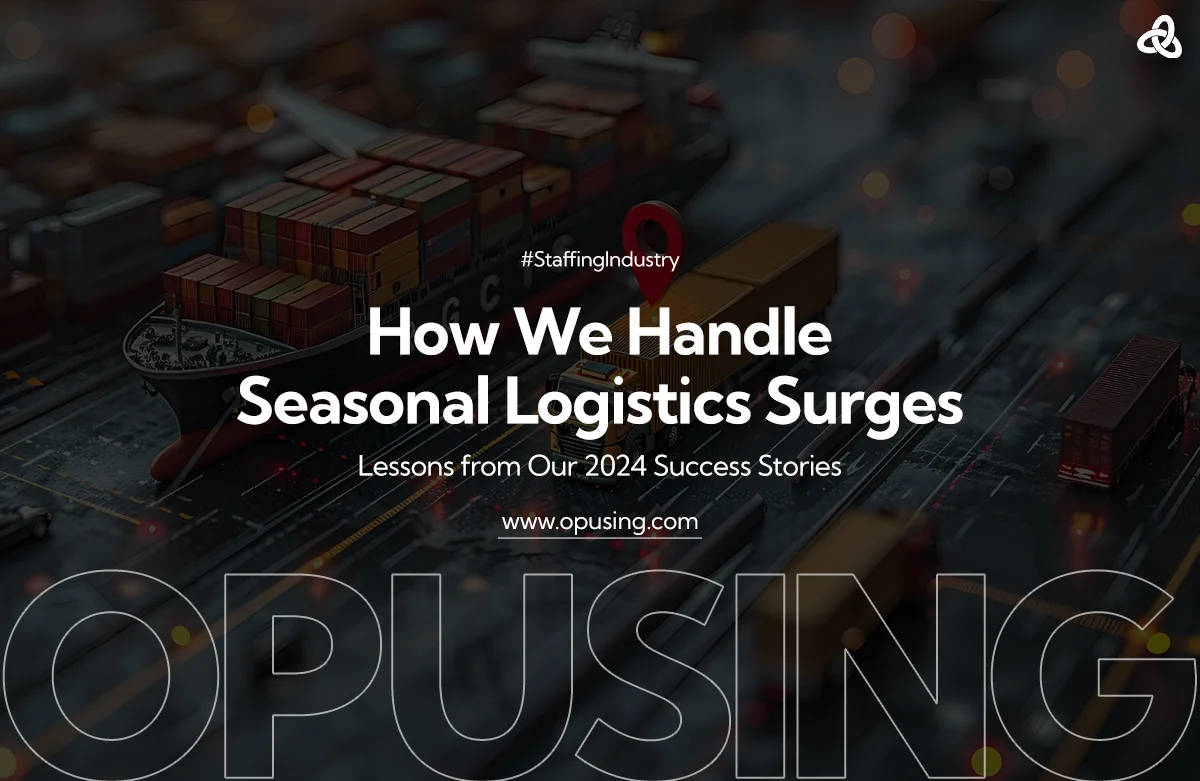
Every year, the same pattern repeats itself in logistics: Q4 hits, order volumes explode, and companies scramble to hire hundreds or thousands of workers in a matter of weeks. Last year, we watched this unfold across the industry and helped companies like UPS, Iron Mountain, and Land O'Lakes navigate what could have been a hiring nightmare.
Here's what we learned and how we're helping logistics companies prepare for their next surge.
The Scale of the Challenge
The numbers tell the story. In 2024, businesses needed to add between 345,000 to 445,000 seasonal workers to keep operations running smoothly. For context, UPS alone hired more than 125,000 seasonal workers to handle holiday demand. When you're facing that kind of hiring pressure, traditional recruitment methods simply don't work fast enough.
We saw this firsthand when we partnered with major logistics operators last year. The ask wasn't just "find us some workers." It was "find us qualified workers who can start immediately, stay through the holidays, and actually show up every day."
That's a completely different challenge.
What Makes Seasonal Logistics Hiring So Difficult
Before we share how we handled it, let's be honest about why this is hard:
- The timeline is brutal. You need people ramped up before the surge hits, which means you're hiring in September and October when unemployment is often at its lowest. You're competing with every other retailer and logistics company for the same talent pool.
- Turnover is astronomical. The logistics sector already struggles with retention, and seasonal workers know they're temporary. Getting them to commit for the full season, not just walk out after the first paycheck, requires strategy.
- Volume overwhelms your systems. When you need to process 500 applications in a week instead of your normal 50, your HR team and hiring managers get buried. Quality control suffers. Good candidates slip through the cracks or accept offers elsewhere because you couldn't move fast enough.
- The work is demanding. Warehouse roles, delivery drivers, material handlers- these aren't easy jobs. You need people who can handle physical labor, irregular hours, and high-pressure environments during the busiest time of year.
How We Helped UPS, Iron Mountain, and Land O'Lakes Stay Afloat
Last year's holiday season was a masterclass in high-volume hiring execution. Here's what we did differently:
1. We Started Early (Before They Thought They Needed To)
By July, we were already building talent pipelines for our clients' Q4 needs. While their competitors were posting job ads in October and hoping for the best, we had pre-vetted candidates ready to interview the moment our clients gave the green light.
This head start made all the difference. When UPS needed drivers and warehouse workers for their 125,000+ seasonal hiring push, we had people ready to go.
2. We Pre-Screened at Scale
Here's where most staffing firms fail: they send you warm bodies and hope for the best. We built a verification process specifically for high-volume seasonal hiring:
- Physical capability assessments to ensure that candidates can handle the demands
- Availability verification to confirm they could work the hours needed
- Background checks were completed in advance, so there were no delays
- Skills verification for roles requiring specific certifications (CDL, forklift, etc.)
For Iron Mountain, where security and reliability are critical, this pre-screening eliminated 90% of the usual hiring friction.
3. We Kept Candidat
The average time-to-hire in logistics can be 2-3 weeks. That's an eternity when candidates have multiple offers. We compressed that timeline to days, not weeks, by:
- Scheduling interviews within 24 hours of application
- Providing immediate feedback
- Handling all the paperwork digitally
- Offering same-week start dates
We also stayed in constant communication with candidates. A text message every few days to confirm their start date and answer questions reduced no-show rates by 40% compared to the industry average.
4. We Planned for Attrition
Seasonal turnover is inevitable. We didn't just fill initial positions; we built a continuous pipeline. When someone quit after week two (and some always do), we had replacement candidates ready immediately.
For Land O'Lakes, this meant their operations never missed a beat, even when early-season turnover hit 15%.
5. We Provided Post-Hire Support
Our work didn't end when candidates started. We checked in with both workers and clients throughout the season to address issues before they became problems. We handled payroll questions, scheduling conflicts, performance concerns and more so our clients' HR teams could focus on operations.
The Results Speak for Themselves
Across our major logistics clients in 2024:
- Average time-to-fill: 6 days (industry average: 18-21 days)
- No-show rate: 8% (industry average: 20-30% for seasonal roles)
- Retention through season: 78% (industry average: 60-65%)
- Client satisfaction: 96% said they'd use us again for next year's surge
More importantly, our clients hit their delivery targets, avoided costly overtime, and didn't have to turn away business because they were understaffed.
What We're Doing Differently for 2025
This year's seasonal surge is already on the horizon. Based on what we learned last year, we're enhancing our approach:
- Earlier talent mapping: We're identifying high-potential seasonal candidates in May and June, building relationships before they're needed.
- Technology integration: New applicant tracking tools cut our time-to-screen in half while improving match quality.
- Flexible workforce models: Not every role needs to be full-time seasonal. We're helping clients explore shift-based, gig-style, and part-time arrangements to access broader talent pools.
- Retention incentives: We're working with clients to structure completion bonuses and performance incentives that keep workers engaged through December.
When You Should Call Us
If you're in logistics and you're reading this thinking "we're going to need help this year," here's when to reach out:
- Now, if you haven't started planning yet. The earlier we begin, the better your outcomes. We can assess your needs, forecast hiring volumes, and start building your talent pipeline months in advance.
- Immediately, if you're already behind. Even if it's September and you're panicking, we can mobilize quickly. We've filled 200+ positions in under two weeks when clients needed emergency support.
- Before next year, if last season was painful. Let's debrief on what didn't work and build a better plan. Many of our best partnerships started with "never again" conversations about hiring disasters.
The Bottom Line
Seasonal logistics surges are predictable, but they don't have to be painful. The difference between companies that thrive and companies that struggle comes down to preparation, speed, and having the right partner.
Last year, we helped some of the biggest names in logistics navigate their busiest season without breaking stride. We can do the same for you.
Ready to talk about your seasonal hiring needs? Let's connect before the surge hits. Because in logistics, by the time you realize you have a hiring problem, you're already behind.
At Opusing, we specialize in high-volume hiring for logistics, warehousing, and distribution. Whether you need 50 workers or 500, we've got the systems, experience, and candidate networks to deliver—fast. Let's talk about your next seasonal surge.
Our Latest Blogs
Get the fresh news from the leaders

7 Best Staffing Agencies Tips to Make Your Job Application Stand Out From the Crowd
We curated seven tips that the best staffing agencies will approve of to help your job application stand out....
Read More
Workforce Solution: Four Advantages of Converting a Temporary Staff to Permanent Employee
Hiring a temporary workforce is the most advantageous workforce solution. However....
Read More
Staffing Firm Edition: 4 Ways To Make Onboarding Process Effective for Remote Employees
Staffing firms will confirm that changing times calls for a process revamp. Now you need to adjust to....
Read More